
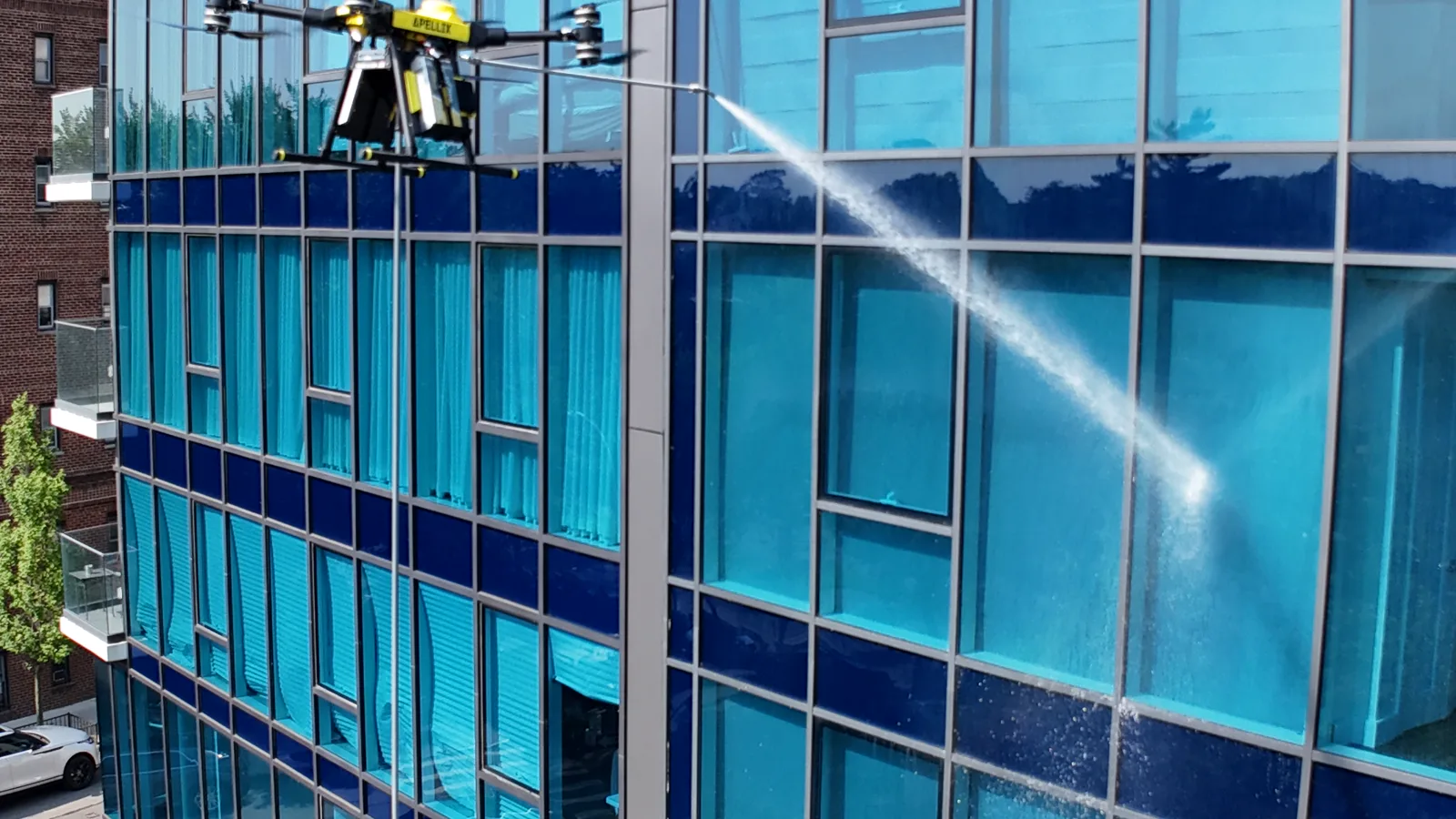
Robotics-enabled commercial cleaning
Reduce access burden. Keep focus on the result.
A robotics-enabled cleaning company can reduce rope, lift, and stage access on suitable jobs. Trained people own the plan, the finish, and the proof.
Tell us the property and the current access method. We will compare a right-sized cleaning plan.
[01]
One accountable clean, several methods.
The robot is one method. The service is the complete clean.
SkyPSI compares robotic, conventional, and hybrid options against the same property scope and quality standard. We use aerial cleaning where it removes avoidable access work, then use water-fed, restoration, pressure, soft-wash, or hands-on methods where the property needs them.
You get one accountable relationship from assessment through closeout.
[02]
Where the savings come from.
High-access cleaning can make a property pay for more than cleaning. Rope teams, lifts, stages, setup, and teardown all sit in the delivery stack.
On a suitable facade, robotics can reduce part of that access layer. Fewer avoidable inputs can mean a lower delivered cost or room to clean more often within the same annual budget. The written property scope determines the method, finish, and savings.
389
of 1,034 construction deaths involved falls, slips, or trips
Private-sector construction, 2024.
[03]
Keep more of the crew on the ground.
NIOSH identifies work at heights as one area where robots can do the dangerous work. In 2024, 389 of 1,034 private-sector construction deaths involved falls, slips, or trips, and 95.9% of those were falls to a lower level.
A trained crew manages the aircraft, water, electrical equipment, pedestrian access, and work area. The property-specific plan keeps the cleaning controlled while reducing the time people spend at height.
[04]
People own the result.
On suitable surfaces, robots can handle part of the access-intensive cleaning work. People assess the building, select the method and chemistry, operate the equipment, inspect the finish, and document the result.
The machine does the climbing. SkyPSI is accountable for the clean.