
The Operator Scoreboard
Bootstrapping vs. Venture Capital in Cleaning Robotics
Apellix entered aerial physical-work and exterior-maintenance systems first. Lucid arrived later and built a venture-funded robotics company. SkyPSI runs on the operator scoreboard: useful equipment, customers, cash flow, debt service, and work completed.
2014 / 2018
Founding years
Apellix started in 2014. Lucid started in 2018 and joined Y Combinator in 2019.
[01]
Two different capital stories
Technology stories often begin with capital: who raised, how much, and at what valuation. Operating businesses begin somewhere else: production from the equipment, the first customer, cash flow against the payment, and a plan for downtime.
A robotics manufacturer may need equity capital for engineering, certification, manufacturing, software, inventory, and years of development. An independent contractor may bootstrap, borrow, lease equipment, or combine savings with operating cash flow. The manufacturer finances invention and scale. The contractor finances a productive asset and the business around it.
Each path answers to different owners and different scoreboards.
Evidence [8]
[02]
Apellix entered the category first
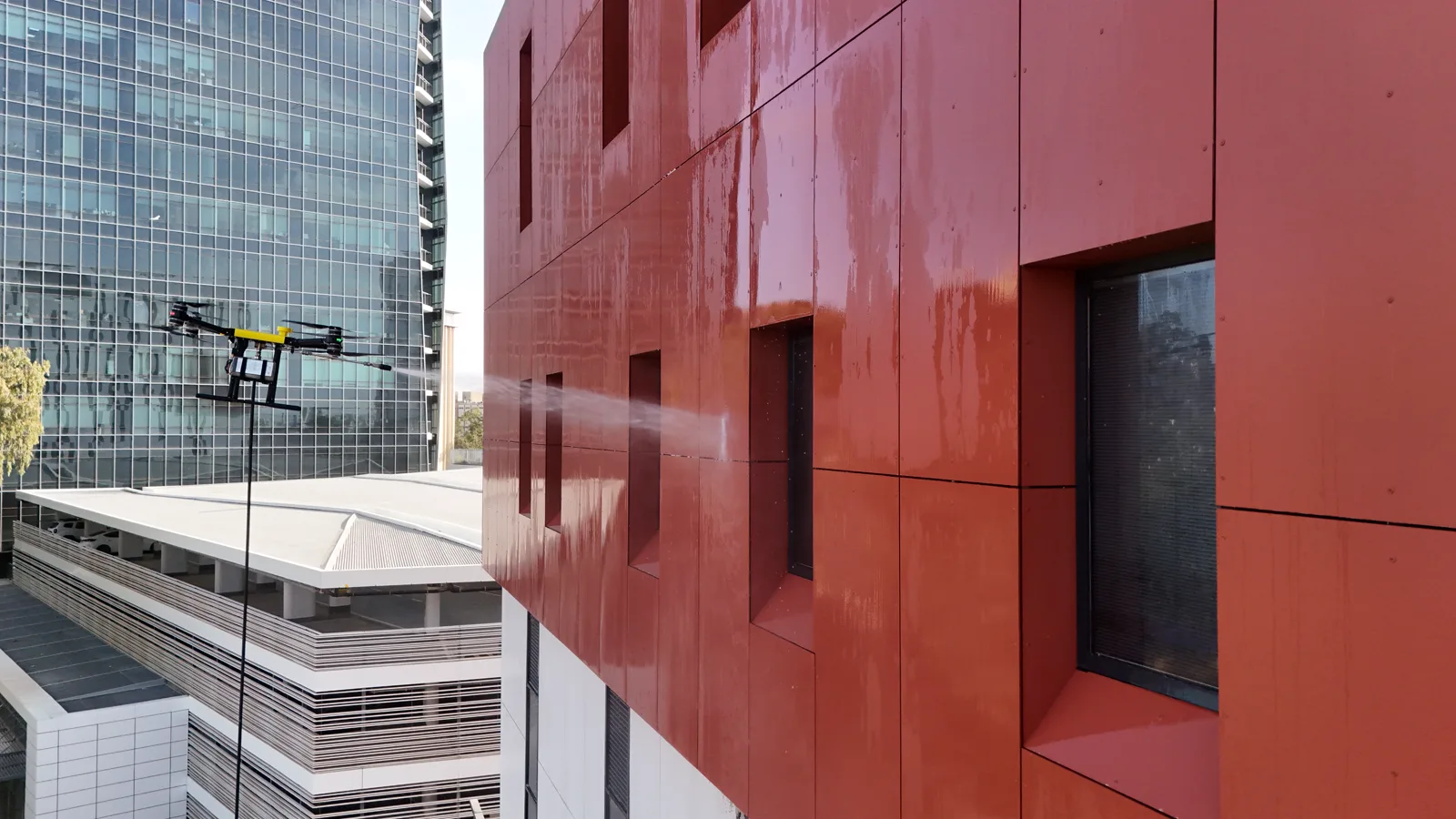
Apellix was founded in Jacksonville in 2014. Its patent record carries a March 31, 2014 priority date for aerial systems that paint and perform related physical work. By July 2016, founder Robert Dahlstrom was discussing aerial robots that paint, wash, and handle hazardous work while people stay on the ground.
Working Drones, the Apellix legal entity, received relevant U.S. patents beginning in 2017. That record makes Apellix an early pioneer and the first entrant in this comparison.
[03]
Lucid is the later, venture-funded entrant
Lucid was founded in 2018 and joined Y Combinator's Summer 2019 batch. It later acquired an AI company and is venture-backed through Series B.
Lucid announced a $9.1 million Series A in 2024 and a $20 million Series B in 2026, bringing total funding to $34 million. That capital can support hiring, inventory, software, acquisitions, marketing, and scale. It also makes Lucid's path structurally different from the owner-operator buying equipment to build a local service business.
Apellix worked on aerial physical-task systems years earlier. Lucid built a venture-scale platform in the category later.
[04]
SkyPSI is built around the operator's scoreboard
SkyPSI helps working people use robotics to start and grow independent service businesses. The Operator stays an entrepreneur who owns the company and the customer base.
Some operators will arrive with an established cleaning company and cash flow. Others will use savings, equipment financing, or a business loan. Those choices require realistic projections, repayment capacity, and a complete view of labor, insurance, vehicles, water systems, customer acquisition, maintenance, and other operating costs.
SkyPSI measures the technology by whether it helps an independent business win, deliver, document, and stand behind useful work. Hardware matters, and the operating business around it matters more.
[05]
Build the operating business
Venture capital can accelerate a manufacturer. Bootstrapping and debt can preserve ownership while concentrating risk on the operator. The right financing path depends on the business, contract, cash flow, and owner's tolerance for dilution or repayment.
The best outcome is a property cleaned to standard, a customer served, a crew kept productive, and an independent company made more capable. That is the capital story SkyPSI supports.
Sources
- [1]Apellix company history
- [2]Google Patents: Apellix-related aerial physical-work patent family
- [3]Commercial UAV News: 2016 interview with Apellix founder Robert Dahlstrom
- [4]Lucid Bots company history
- [5]Y Combinator company profile: Lucid Bots
- [6]Lucid Bots Series A announcement
- [7]Lucid Bots Series B announcement
- [8]U.S. Small Business Administration: Fund your business
Build With SkyPSI
Build around your own customers and cash flow.
Commercial cleaning rewards a service people will buy and a crew that can deliver it. SkyPSI brings the flight kit, training, support, and marketing guidance together while you own the business. Compare the offer against assembling those pieces yourself.