
Aircraft Weight and Working Load
Why Cleaning-Drone Weight Matters
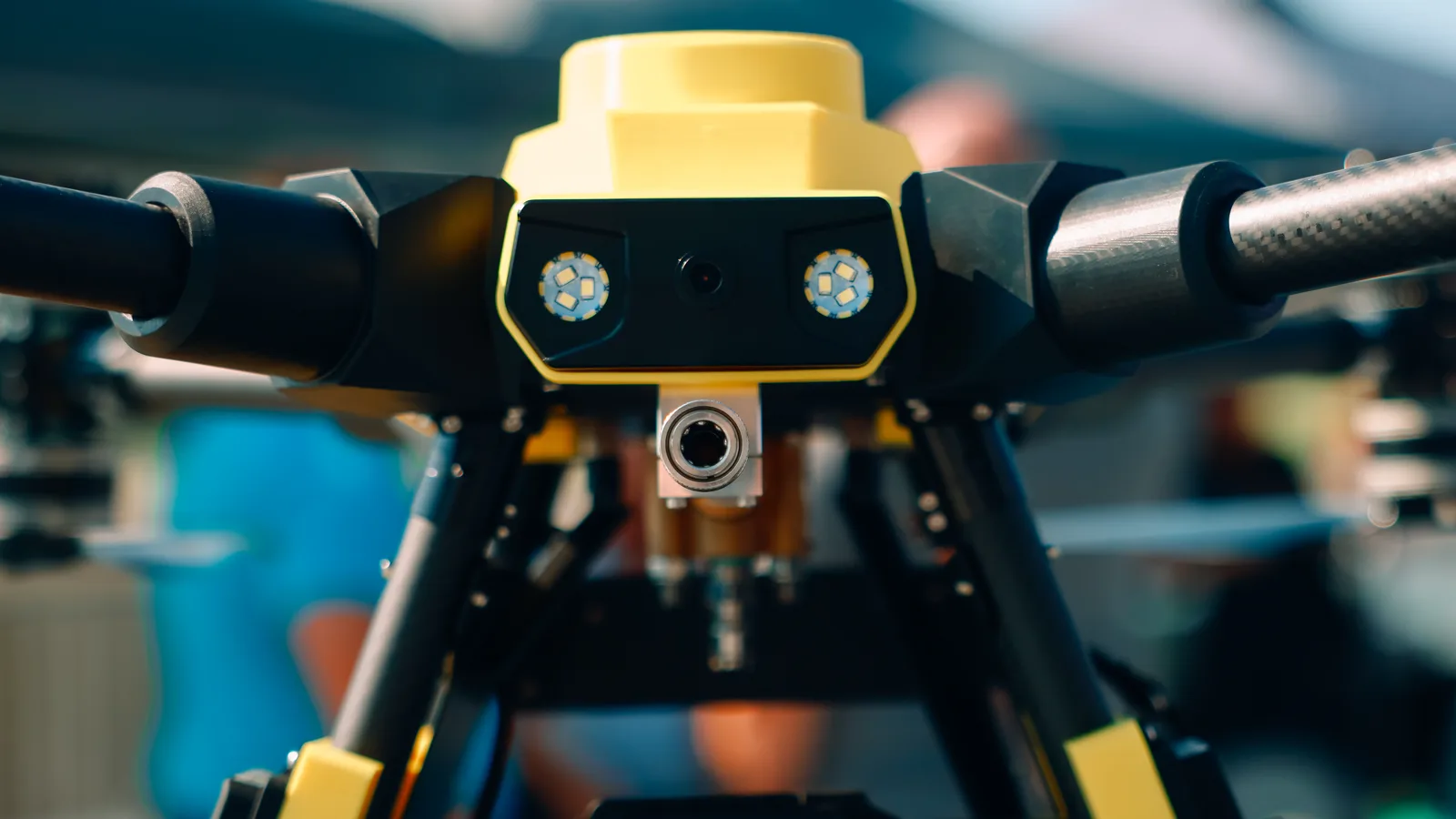
A cleaning drone must lift the aircraft, batteries, spraying hardware, suspended hose, and fluid. In the closest equivalent battery-equipped wash configurations, the Apellix B2 is approximately 30 pounds and the Lucid Sherpa is 37.2 pounds. The B2 is 7.2 pounds, or approximately 19%, lighter.
~19%
Lighter wash configuration
Approximately 30 pounds for the battery-equipped B2 versus 37.2 pounds for the battery-equipped Sherpa spraying configuration.
[01]
Compare the same kind of weight
Compare like with like. An empty airframe and a spray-ready system are different numbers. The B2 is approximately 20 pounds of aircraft plus 10 pounds of batteries, about 30 pounds before airborne hose and water. The Sherpa is 37.2 pounds with airframe, standard spraying payload, and two flight batteries.
The math is 37.2 - 30.0 = 7.2 pounds. Dividing by the 37.2-pound Sherpa configuration makes the B2 approximately 19.4% lighter. Expressed from the other denominator, the Sherpa configuration is 24% heavier than the B2 configuration.
Dry airframes are close: 21.5 pounds for the B2 and 21.8 pounds for the Sherpa, approximately 1.4% apart. The battery-equipped wash comparison is the one that matters for flight planning.
| Definition | Lucid Sherpa | Apellix B2 | Difference |
|---|---|---|---|
| Dry airframe | 21.8 lb | 21.5 lb | B2 ~1.4% lighter |
| Battery-equipped wash configuration | 37.2 lb | ~30.0 lb | B2 ~19.4% lighter |
The battery-equipped figures exclude the airborne portion of hose and fluid.
[02]
Weight consumes energy and working margin
A multirotor must continuously generate enough thrust to support its complete operating mass. More mass generally requires more propulsion power, although rotor area, motor efficiency, propellers, battery chemistry, control software, wind, and flight profile also matter.
Under ordinary Part 107 treatment, the complete aircraft, attached equipment, payload, and cargo must remain below 55 pounds. Using the rounded battery-equipped wash figures, the B2 has 25 pounds of nominal arithmetic space to 55 pounds while the Sherpa has 17.8 pounds. The B2 therefore preserves 7.2 more pounds, or approximately 40% more nominal headroom relative to the Sherpa's remainder.
The calculation shows the weight remaining for hose, fluid, fittings, and other attached equipment. Use the approved aircraft configuration to set the working load.
[03]
The hose turns mass into a control problem
The payload changes in flight. As the drone rises and moves laterally, the suspended hose length, fluid mass, drag, bend resistance, tension, and snag risk change. Spray activation adds reaction force. Wind and facade turbulence add more disturbance.
A lighter base configuration preserves more of the operating envelope for that working load. Check the operating manual for wind limits, flight profiles, and approved configurations.
Starting 7.2 pounds lighter leaves less dead mass to lift before the hose begins doing useful work.
[04]
Window architecture shows the trade
The Sherpa window configuration weighs 38.6 pounds versus 37.2 pounds for the standard spraying configuration, approximately 4% more. Airborne liquid load varies during use.
Windows are a standard B2 application with no separate window payload. The architecture keeps the cleaning supply ground-fed. No tank-and-mixer assembly joins the flight configuration.
That protects weight for the part of the system that must rise with the aircraft.
[05]
Weight matters before the aircraft leaves the case
A lighter aircraft can also reduce the physical burden of unloading, carrying to the launch point, handling during inspections, and completing each battery transition. Complete job logistics include the controller, batteries, chargers, pump, hose, water system, chemistry, tools, and safety equipment.
Every motor overcomes weight for every second of flight. In a hose-fed cleaning system, the B2 wash configuration is approximately 19% lighter, and that is a meaningful operating advantage.
Build With SkyPSI
Turn engineering into operating capability.
Weight and hose handling matter because your crew must deliver a real cleaning scope. SkyPSI combines the B2 flight kit, field training, front-line support, and loaner assurance so you can evaluate the equipment as part of a working business.