
Window-Cleaning Architecture
Window Cleaning From the Ground System
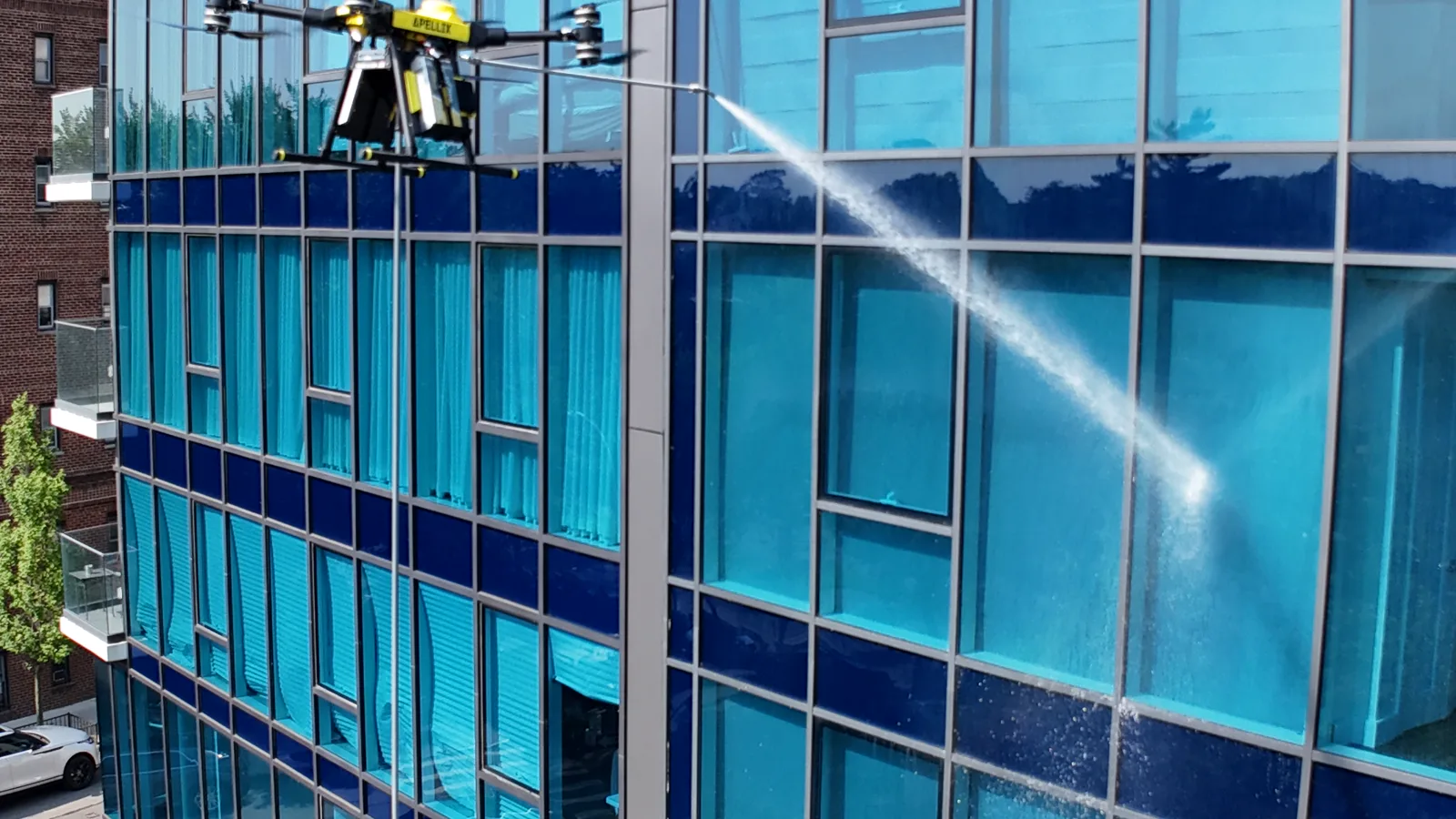
Window cleaning needs the right water, chemistry, delivery, and rinse method. A ground rig can supply all four. Windows are a standard B2 application with no separate window payload. The Sherpa window system is an optional payload attachment.
INCLUDED
B2 window-cleaning capability
Windows are a standard B2 application with no separate window payload.
[01]
The cleaning medium can stay on the ground
A hose-fed cleaning drone divides the system into two jobs. The ground rig produces water quality, pressure, flow, and compatible cleaning solution. The aircraft places the hose and nozzle at height.
The B2 works with standard industry nozzles, hoses, and pumps. It can spray water, soap, detergent, bleach, and other cleaning solutions. Windows are a standard application, and a soft-wash hose ships with the system. There is no separate window payload among the add-ons.
Window capability is part of the standard B2 method. Hard-water staining, paint, sealant, restoration defects, and some coatings can require agitation or another method.
Evidence [1]
[02]
What Lucid's optional payload adds
Lucid describes Sherpa window cleaning as an optional payload attachment. Its onboard tank and variable-ratio mixer let the pilot switch between cleaning solution and deionized water while the aircraft stays aloft.
That helps when a job benefits from remote wash-and-rinse switching and the ground water line must stay dedicated to purified water. It is one operating option among several.
| Decision | Lucid Sherpa | Apellix B2 |
|---|---|---|
| Window capability | Optional payload attachment | Standard listed application |
| Chemical handling | Onboard tank and variable mixer | Compatible ground-fed cleaning solutions |
| Separate window hardware | Additional flight-side payload | No separate window payload listed |
This compares system architecture. Cleaning quality on a matched property is a separate test.
[03]
Purified water is a ground system
Professional pure-water systems use reverse osmosis and deionization to remove dissolved minerals before the water reaches the glass. When the surface and soil are suitable, mineral-free water can rinse and dry without the spotting caused by ordinary hard water.
That production equipment stays on the ground. The aircraft needs one thing: a controlled, compatible way to deliver the selected medium to the surface.
Evidence [4]
[04]
Every airborne add-on has a weight cost
The Sherpa specification lists 37.2 pounds for the standard spraying configuration and 38.6 pounds for the window configuration, both with batteries. The window configuration is 1.4 pounds, or approximately 4%, heavier before liquid and hose weight.
Keeping chemistry and water treatment on the ground removes a dedicated tank and mixing assembly from the aircraft. The hose and fluid keep their own weight. The margin saved goes to the load that must fly.
Evidence [3]
[05]
Choose the method around the glass
Use a separate onboard payload when its switching and mixing functions materially improve the exact workflow. Use a ground-fed method when purified water or compatible ground-applied chemistry can produce the required finish while keeping the aircraft simpler and lighter.
SkyPSI starts with the glass, frames, seals, water quality, contamination, runoff, wind, hose route, and required finish. The test is whether the complete method can safely deliver the result.
Evidence [5]
Build With SkyPSI
Build a service around the finished glass.
The commercial opportunity is a clean building, including the areas a drone cannot finish. SkyPSI adds field training and support around the B2 flight kit so you can plan a complete cleaning scope and build the customer relationship.