
The Conversation
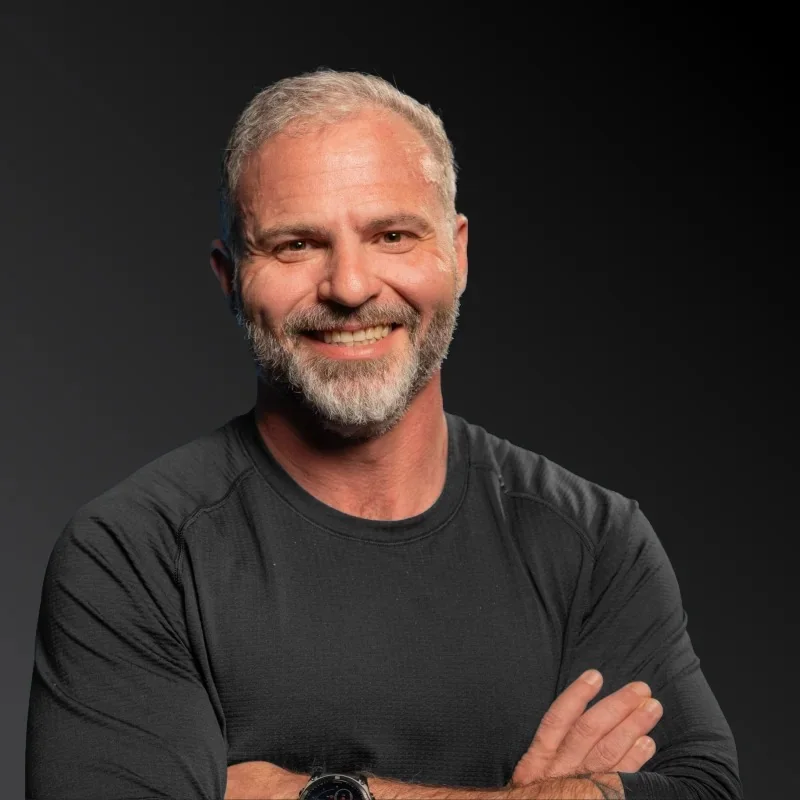
Randy Goers is host of the Drone Radio Show, a podcast about drones and the people who use them for business, fun and research. In Episode 465, he talks with SkyPSI founder and CEO Vic Pellicano about his path from a trailer park outside Chicago to selling a company to Oracle, the economics of drone cleaning, how to get started, and why robotics could open business ownership to the next generation.
DRONE RADIO SHOW
Vic, drones are moving into demanding commercial work, including exterior building cleaning. What does SkyPSI do, and what problem are you solving?
Vic Pellicano
We help blue-collar operators bid on and win more work with high-margin equipment like drones. As the tools change for blue-collar workers, we're getting those tools into their hands, along with what they need to find work, bid it faster and grow their businesses.
DRONE RADIO SHOW
You're doing more than selling cleaning drones. How does the business side work?
Vic Pellicano
We're largely an enablement company for these operators. We have a piece of software called Operator+ where folks can log in for free and see a map of where they live, all the commercial properties, and what a washing job could get them. You can see how tall the buildings are and about how much you would quote a wash for. Should they choose to buy drone equipment, I hope they do it through me, and we provide training and other services around it. My dad was a truck driver, and he had to work through big companies and brokerages because he couldn't find his own work. My hope is that in this new world of robots and AI, one of the big lifts I can give the next generation of blue-collar folks is all that big-company sophistication, the front office and the robotics, while they're their own boss, which I think is every American's dream. At least it was mine.
DRONE RADIO SHOW
How did your upbringing and early career shape the entrepreneur you've become?
Vic Pellicano
I grew up in a trailer park outside of Chicago. My mom was the most educated in my family, and she had a GED. I was the first in my family to go to college, and I double majored in computer science and math. My parents gave me the ability to aim that high, though not financially. I took out $150,000 in debt. They passed away when I was young, and my dad died with about $3,000 in his checking account. I lost the house I grew up in and ended up homeless for a little while. Then I took a job in sales at a manufacturing company in Chicago, and I started building software to automate my own job. Eventually I turned that into a company called Verenia. I bootstrapped it and ran it for about 10 years before Oracle acquired it about five years ago. Then I got into the drone space. Now I'm helping the operators, the people buying these robotics, get the economic value they deserve. I just want to give everybody a shot. I think the greatest blessing I ever had was getting to work for myself, and I think everybody should experience that.
DRONE RADIO SHOW
What is it about drones and robotics that makes you believe they can create similar opportunities for the next generation?
Vic Pellicano
My dad, for a truck driver, was surprisingly technology forward. He had a ham radio in the basement where he could talk to other truck drivers around the world. I think that ultimately let me dig my way out. I saw computers as my tool to climb, where I didn't have to play by the same rules the generation before me did. I see robots and AI as the next generation's way to jump the line a little bit and not just sit behind the guy before you.
DRONE RADIO SHOW
From the manufacturer's side, what did you see that convinced you there was an unmet need?
Vic Pellicano
I saw the economic value of these units to the people buying them. When I looked at those buyers, I saw my dad. These blue-collar guys are sharp, and you can't just trick them into buying things. Where they struggled was sales and marketing. They'd say, "Okay, I got the robot. Now how do I win an account? How do I invoice?" Property managers call us looking for qualified operators to clean their buildings. They want to know who has a drone, who's certified, and who has been through proper training, because a lot of guys are buying this equipment but nobody knows who to let on and off their property.
DRONE RADIO SHOW
Are you seeing both established cleaning companies and brand-new entrepreneurs, and what is the business case for each?
Vic Pellicano
It's 50-50 between new entrepreneurs and folks who already have a cleaning business and want to expand with a drone. If you already have commercial cleaning accounts, odds are you're doing a lot of that work by hand, putting guys up on booms or hanging them from the roof with ropes and pulleys. It's dangerous, low margin and very expensive on the insurance side. Provided the building is in that 4 to 20 story range, if you do it by drone your margins go up to like 60, 70%. It's funny that everybody thinks it will eliminate jobs, but it's really the same crew size. You had three guys hanging on ropes. Now you have three guys on the ground: one helping with the hose, one making sure the machine is running, and one piloting. Same crew, no jobs lost, everybody safe on the ground, and the job's done about five times as fast. If you're starting up, it's a cool thing to do in your area. There are 17 million buildings that could be cleaned with these drones, so odds are nobody around you has seen one in person. If you start flying it somewhere and you do a demo, you'll get all the eyeballs you need to start your new business.
DRONE RADIO SHOW
Suppose I've never operated a drone and have no cleaning background. How hard is it to get started, and what would I need to invest?
Vic Pellicano
You need a Part 107 license, which takes two to three weeks. It's mainly online, and you go to a test center to take the test. Then you need the manufacturer's training and actual cleaning training. It's one thing to fly a drone, one thing to get a license, and another thing to be able to clean with it. What PSI do you use at what height? How do you deal with the wind? On cost, it depends on how you start up. If you're already doing some pressure washing, you've got that piece of equipment covered, and the drone comes with monthly payment options. The software is really where SkyPSI helps. You think, "Where am I going to find the work? I'm not going to buy this thing and have it sit in my garage." With us you get the software included. There's a map of your area with all the buildings and their contacts, so you can find the property manager and send proposals right from the app. I strongly recommend you get in touch with the person first. You're trying to build a relationship with a human being, not spam people.
DRONE RADIO SHOW
From your experience, what separates the operators who build lasting businesses from those who struggle?
Vic Pellicano
I'll be honest with you. It's like running any business, and I think they're all kind of the same. It's the same thing I tell my kids about being a man when you get bigger. You say what you're going to do, and you do what you say you're going to do. Your business identity ends up being a reflection of you. When you say you're going to show up, do you show up? Are you making sure every human who deals with you has a better experience at the end of it? Then your business is going to be great, and these folks are going to call you back over and over. The mechanics of the cleaning you'll get better at. You do training with us down in Dallas, where we have a partner who is very experienced, with about 100 drone cleaning jobs. But at the end of the day, the training is only going to get you so far, and you're going to have to learn on the job. If they like you, they'll help you get better. If they don't like working with you, they're not going to give you good advice, and you're going to lose that account. It takes so much effort to win one of these accounts that if you burn it, that's on you.
DRONE RADIO SHOW
For listeners who haven't seen a cleaning drone in operation, how does the system work?
Vic Pellicano
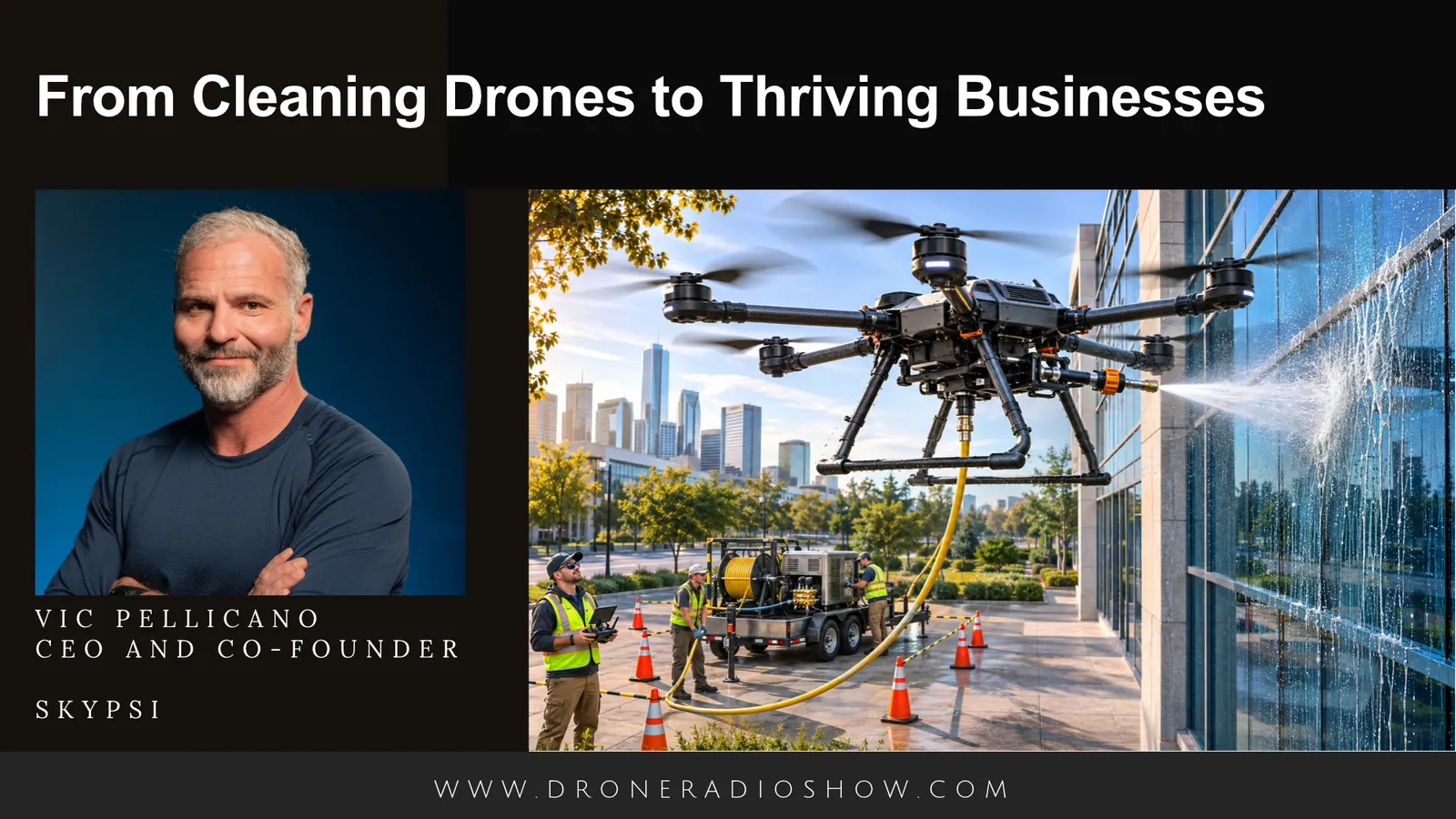
I always talk like I'm talking to my dad. If you've used a pressure washer, it's the same thing, but it flies in the air, and it's a specially tuned drone to deal with all that pressure going back and forth. You can't just use a consumer camera drone you have laying around. It's a very hardened piece of equipment, built for the pressure, the rain and the cleaning chemicals. The question I get asked the most is, how do you get the water up there? People think there's a tank. Even the best in class, which is the drone we work with, has about a 30-minute flight time. The batteries are just not great at this stage, which is the biggest problem with robotics anywhere. So you land every 30 minutes and swap out the batteries, and you can't carry the water because it would drain them. The water sits on the ground in what's called a rig. At your house, a pressure washer has an electric pump hooked up to the hose. The rig is a bigger, fancier version of that. It cleans the water, removes minerals, and operates at a much higher pressure over much longer distances. Its purpose is to feed the water and chemicals up to the drone.
You say what you're going to do, and you do what you say you're going to do.
DRONE RADIO SHOW
When did you launch, and what response are you getting from entrepreneurs and property managers?
Vic Pellicano
About three months ago. The response is incredible. I've never been around a business like this. You have a guy who's maybe doing residential work, picking up a few hundred dollars a job here and there, and he sees a commercial building where he can easily get $5,000 to $15,000 to clean it by drone. They're obviously super interested in getting involved as quickly as possible. The property managers think, "Oh man, I could get my cleaning bill cut in half." Some of them spend upwards of $70,000, $80,000 a year cleaning those hotels. If you go in there with a drone and do it for $30,000, it's win-win for everybody. It's the technology meeting the market in a way where everybody makes money in the equation.
DRONE RADIO SHOW
Worker safety may matter as much as the money. How big a change could drones be?
Vic Pellicano
You're even seeing local ordinances in some cities banning traditional window cleaning, because nobody wants their city or their property in the news for something horrific happening to somebody. People get maimed, and it's a horrible, scary thing. It doesn't have to exist anymore. All of a sudden there's a choice, so we should take the good option, and everybody makes more money at the end of the day.
DRONE RADIO SHOW
How will these technologies change exterior cleaning over the next five to 10 years, and what opportunities might they create for people who want to build their own businesses?
Vic Pellicano
It's going to change everything for exterior cleaning. The technology is still young. Everybody has seen software for the last 30 years, and everybody has a timeline in their heads that robots will follow the same trajectory. They won't. Hardware is hard, and it takes time, so there's plenty of time here to build a business. It's going to grow fast. More and more people will come out of the middle of corporate America, where AI will start to take over some of that work, and they'll want to do something. You're already seeing huge growth in home services. You're seeing wages go up and, I think, all-time highs of new businesses being formed. We need more people owning their own businesses and working for themselves. It's going to be about people, just like always. It's a tool, and entrepreneurial folks are going to find ways to make use of it, create value for other people and make the world safer and better, like we always have.
I went from being homeless to selling a company to Oracle, and I want everybody to feel that way.
We need more people owning their own businesses and working for themselves.
DRONE RADIO SHOW
Your own story shows how access to technology and a willingness to take a chance can change someone's life. What final message would you leave with someone thinking about that entrepreneurial leap?
Vic Pellicano
In my career, the world has gotten safer and cleaner every year. It's safer than it ever was, statistically, despite what you read in the news. That trend will continue, and we all get to be a part of it. Part of it is robotics. I think it's imperative that every American who likes to hustle and be rewarded for their effort think about starting a business, whether it's a side hustle or a full-time job. This is America. You can go out and earn it. There are guys like me out there hustling every day to give you all the tools you need to be successful, and I only succeed if my customers do. So look for the tools out there, create value for somebody and be your own boss. I did it, and it changed my outcome materially. I went from being homeless to selling a company to Oracle, and I want everybody to feel that way.
Edited for length and clarity.
Original coverageListen to the episodeRandy Goers with Vic Pellicano on Drone Radio Show.