
Put every elevation on the right method.
SkyPSI compares aerial, rope, lift, stage, water-fed, and hybrid methods for the building, then documents the scope, finish, fallback, and closeout.
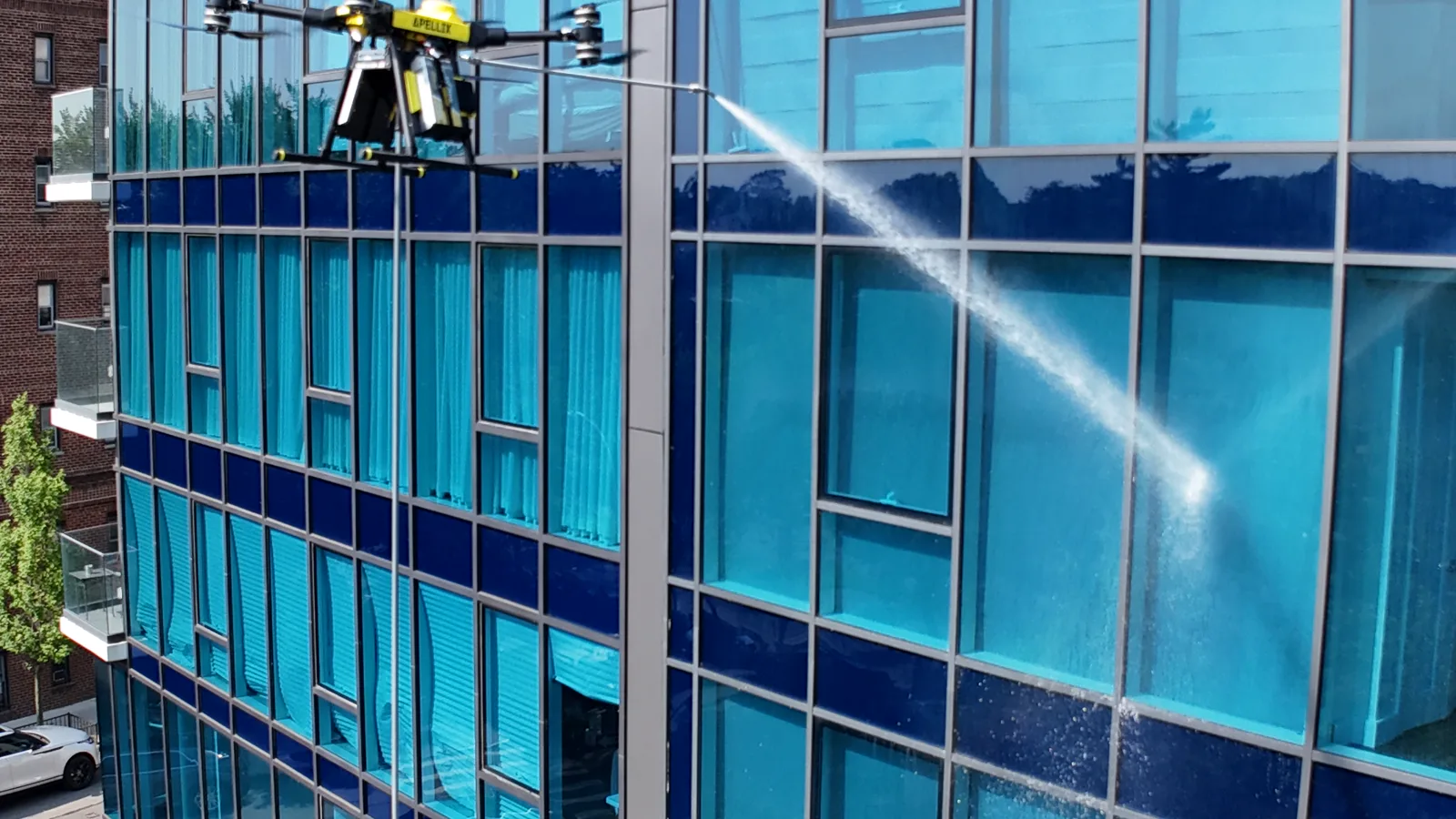
Aerial first, hands-on where needed
Large uninterrupted elevations can fit a ground-operated aerial pass. Recessed panes, bonded minerals, fragile systems, and close inspection may require rope, lift, stage, or hand work. SkyPSI assigns the method by surface, condition, access, airspace, and required finish.
15
stories of field experience
850+
windows across two commercial buildings in two days
SkyPSI Services leadership has personally run this work.
Where aerial cleaning earns its place
Aerial first
- Large, uninterrupted exterior elevations
- Curtain wall and recurring maintenance
- Difficult lift staging or tight setbacks
- Entrances, plazas, parking, or drive lanes with a compliant isolated work area
- Properties prioritizing less work at height
Hands-on where needed
- Bonded mineral deposits or construction debris
- Surfaces requiring direct agitation
- Restricted airspace or unsafe weather
- Fragile or incompatible facade systems
- Close inspection or repair work
Move the equipment up. Keep more people down
A ground-operated aerial system reduces the amount of work performed from ropes, lifts, or suspended platforms. SkyPSI plans the airspace, weather, exclusion zones, water, runoff, pedestrian movement, and operating windows before the first cleaning pass.
One plan
Every elevation is assigned its method before work starts.
High-rise window cleaning questions
SkyPSI reviews each building's elevations, surroundings, airspace, equipment, surfaces, and operating conditions before setting the working plan.
It can replace those methods across large exterior elevations. Traditional access remains in the plan where direct contact, close inspection, restoration, or site conditions call for it.
Yes. The site plan maps entrances, pedestrian movement, drive lanes, parking, water, runoff, work windows, and exclusion zones before scheduling.
Compare every access option in Drone vs Rope, Lift, and Stage Cleaning, review the complete Commercial Window Cleaning scope, or plan an office-building scope.
Put every elevation on the right method.
Address, elevations, current method, current cadence, and operating restrictions are enough to begin. We confirm the savings and the access method for your building.